Showing posts with label Andrew Joyce. Show all posts

Monday, October 30, 2017

Guest Post by Andrew Joyce, Author of Bedtime Stories for Grown-Ups

Hello, my name is Andrew Joyce. I have a new book out entitled Bedtime Stories for Grown-Ups. It came about because my editor hounded me for two years to put all my short stories into one collection. Actually, it was supposed to be a two-volume set because there was so much material. I fended her off for as long as possible. I didn’t want to do the work of editing all the stories. There were a lot of them. But she finally wore me down. Instead of two volumes, I put all the stories into a single book because I wanted to get the whole thing over with. I had other books to write.

Bedtime Stories is made up of fiction and nonfiction stories and some of ’em are about my criminal youth. I must tell you, I never thought any of these stories would see the light of day. I wrote them for myself and then forgot about them. By the way, there are all sorts of genres within its pages, from westerns to detective stories to love stories and just about anything else that you can imagine.

There are a whole lotta stories in the book—700 pages worth. Enough to keep you reading for the foreseeable future.

Anyway, here’s one of the shorter fiction stories from the book.


Everything’s Jake


It was early in the morning when the man rode into town from the east, the sun at his back, his long shadow before him. The street was deserted except for an old mongrel dog sniffing its way home after a long night’s prowl.

He proceeded on the main thoroughfare—the town’s only thoroughfare—until he came abreast of the Blue Moon Café with its “WE NEVER CLOSE” sign hanging from the ramada. Spurring his horse over to the hitching post outside the café, he dismounted and entered the establishment.

At that time in the morning, the chairs were on the tables, and the only occupants were a boy sweeping the floor and a disheveled, overweight man behind the bar wiping a glass with a dirty rag. The barkeep watched the stranger approach.

“How ’bout some whiskey?” said the stranger.

When the barman was slow in responding, the man grabbed his collar, pulled him down until he was bent over the bar and their eyes were staring into each other’s.

“I said whiskey,” growled the stranger.

“Yes sir, right away,” was the barkeep’s quick response.

When released, with a shaking hand he placed the glass he had been wiping on the bar, grabbed a bottle from beneath the counter, and poured a liberal amount of an amber liquid into it.

As he started to re-cork the bottle, he was told to leave it.

“Yes sir.”

Turning his back to the bar and placing his elbows thereon, he called to the youth doing the sweeping.

“Hey you, boy, come over here.”

Placing his broom against the nearest table, the boy did as he was bid.

“You got a name, son?”

“Yes sir. It’s Billy.”

“Well, Billy, do you know a man by the name of Jake Tapper?”

“Yes sir.”

“Do you know where he lives?”

“Yes sir.”

Reaching into his vest pocket, the man withdrew a silver dollar and flicked it in the boy’s direction. “You go tell Jake that Mac’s in town.”


• • • • •


Jake lay on his bed, staring at the ceiling. It was much too early to be awake, but since she left, he’d found it hard to sleep. It had been a heady eight months. He had never loved a woman as he had loved Jeanie. Sure, it was taking a chance messing with Mac Conway’s woman, but it had been worth it. Now that she had run off with that piano player from the Blue Moon, he thought he’d just stop running from Mac. Might as well get it over with, thought Jake.

Then there was a knock at his door. “Yes, who is it?”

“It’s me, Mister Tapper. Billy Doyle.”

“Whatcha want, Billy?”

“A man down to the Blue Moon told me to tell you that Mac is in town. I think he wants to talk to you.”

“Alright, Billy. You tell him I’ll be right there.”

Jake packed his few belongings and left the room. Instead of going to the Blue Moon, he went to the livery stable and saddled his horse. Then he mounted and headed out of town as fast as the beast could carry him.

It is one thing to think brave thoughts in the seclusion of your room, but it’s another thing to face Mac Conway in a saloon. Hell, it ain’t healthy to face off with Mac anywhere. Now that Jeanie’s gone, there’s no reason to git myself killed.

The next day Mac caught up with Jake, and then went looking for Jeanie.
 
 
~~~~~~~~~~~~~~~~~~~~~~~~~~~~~~
 
 
Publisher: W. Birch & Associates
Pub. Date: September 21st, 2017
Pages: 689
 
Genre: Short Story Collection
 

Bedtime Stories for Grown-Ups is a jumble of genres—seven hundred pages of fiction and non-fiction … some stories included against the author’s better judgment. If he had known that one day they’d be published, he might not have been as honest when describing his past. Here is a tome of true stories about the author’s criminal and misspent youth, historical accounts of the United States when She was young, and tales of imagination encompassing every conceivable variety—all presented as though the author is sitting next to you at a bar and you’re buying the drinks as long as he keeps coming up with captivating stories to hold your interest.

Comprised of 218,000 words, you’ll have plenty to read for the foreseeable future. This is a book to have on your night table, to sample a story each night before extinguishing the lights and drifting off to a restful sleep.

Mr. Joyce sincerely hopes that you will enjoy his stories because, as he has stated, “It took a lot of living to come up with the material for some of them.”


Buy the Book


About the Author


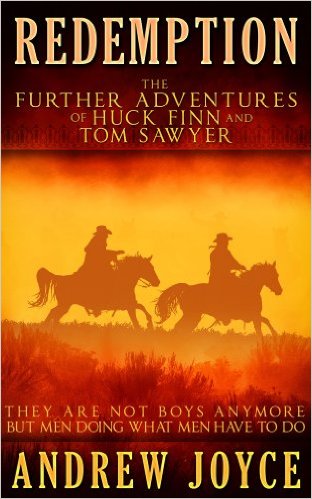
Andrew Joyce left high school at seventeen to hitchhike throughout the US, Canada, and Mexico. He wouldn't return from his journey until years later when he decided to become a writer. Joyce has written five books. His first novel, Redemption: The Further Adventures of Huck Finn and Tom Sawyer, was awarded the Editors' Choice Award for Best Western of 2013. A subsequent novel, Yellow Hair, received the Book of the Year award from Just Reviews and Best Historical Fiction of 2016 from Colleen's Book Reviews.

Joyce now lives aboard a boat in Fort Lauderdale, Florida, with his dog, Danny, where he is busy working on his next book, tentatively entitled, Mahoney: An American Story.
 
To learn more about Joyce visit his website.


Tuesday, October 18, 2016

Guest Post by Andrew Joyce, Author of Yellow Hair


My name is Andrew Joyce and I write books for a living. Colleen has been kind enough to allow me a little space on her blog to talk about my latest, Yellow Hair.

Yellow Hair documents the injustices done to the Sioux Nation from their first treaty with the United States in 1805 through Wounded Knee in 1890. Every death, murder, battle, and outrage depicted actually took place—from the first to the last. The historical figures that play a role in my story were real people and I used their real names. I conjured up my protagonist only to weave together the various events conveyed in my fact-based tale of fiction. Yellow Hair is an epic tale of adventure, family, love, and hate that spans most of the 19th century. It is American history.

The inspiration for the book came to me when I was reading a short article and it made reference to the Great Sioux Uprising of 1862. It also mentioned that the outcome involved the largest mass execution in the history of the United States. That piqued my interest.
 

When I started my research into the incident, one thing led to another and before I knew it, I was documenting the entire history of the Sioux, who are also known as the Dakota, vis-à-vis the relationship between them and the United States.


Because the book exists only because I read the phrase, “the largest mass execution in the history of the United States,” I’ll tell you a little about that. What follows is an extremely abbreviated version of events.


The Dakota signed their first treaty with the United States in 1805 when they sold a small portion of their land to the Americans for the purpose of building forts. It was right after the Louisiana Purchase and President Jefferson wanted a presence in the West. At the time, “the West” was anything on the western side of the Mississippi River.


In the treaty of 1805, the Dakota sold 100,000 acres to the Americans. The agreed-upon price was $2.00 per acre. But when the treaty came up before the Senate for ratification, the amount was changed to two cents per acre. That was to be a precursor for all future treaties with the Americans. There were subsequent treaties in 1815, 1825, 1832, 1837, and 1851, and basically the same thing happened with all those treaties.


In 1837, the Americans wanted an additional five million acres of Dakota land. Knowing it would be a hard sell after the way they failed to live up to the letter or spirit of the previous treaties, the government brought twenty-six Dakota chiefs to Washington to show them the might and majesty that was The United States of America.


The government proposed paying one million dollars for the acreage in installments over a twenty-year period. Part of the payment was to be in the form of farm equipment, medicine, and livestock. Intimidated, the Indians signed the treaty and went home. The United States immediately laid claim to the lands—the first payment did not arrive for a year.


The significance of the 1837 treaty lies in the fact that it was the first time “traders” were allowed to lay claim to the Indians’ payments without any proof that money was owed . . . and without consulting the Indians. Monies were subtracted from the imbursements and paid directly to the traders.


By 1851, the Americans wanted to purchase all of the Dakota’s remaining lands—twenty-five million acres. The Sioux did not want to sell, but were forced to do so with threats that the army could be sent in to take the land from them at the point of a gun if they refused the American’s offer.


“If we sell our land, where will we live?” asked the Dakota chief.


“We will set aside land for the Dakota only. It is called a reservation and it will be along both banks of the Minnesota River, twenty miles wide, ten on each side and seventy miles long,” answered the Commissioner of Indian Affairs.


The Dakota were offered six cents an acre for land that was worth at least a dollar an acre. The payment would be stretched out over a twenty year period and was to be made in the form of gold coins. One year later, in 1852, the Americans took half the reservation, the seventy miles on the north side of the river. The Dakota were now reduced from a nation of fierce, independent people to a people dependent on hand-outs from the ones who stole not only their land, but also their dignity.


The Dakota were forced to buy their food from the traders who ran trading posts at the Indian Agency the U.S. Government had set up on the reservation. All year long the Dakota would charge what they needed. When the yearly payment for their land arrived, the traders would take what they said was owed them. Subsequently, there was very little gold left for the Dakota.


By 1862, the Dakota were starving. That year’s payment was months late in arriving because of the Civil War. The traders were afraid that because of the war there would be no payment that year and cut off the Dakota’s credit. The Indian Agent had the power to force the traders to release some of the food stocks, but refused when asked to do so by the Dakota.


After they had eaten their ponies and dogs, and their babies cried out in the night from hunger, the Dakota went to war against the United States of America.


They attacked the agency first and liberated the food stock from the warehouse, killing many white people who lived there. Then bands of braves set out to loot the farms in the surrounding countryside.


Many whites were killed in the ensuing weeks. However, not all of the Dakota went to war. Many stayed on the reservation and did not pick up arms against their white neighbors. Some saved the lives of white settlers. Still, over 700 whites lost their lives before the rebellion was put down.


When the dust settled, all of the Dakota—including women and children, and those people who had saved settlers’ lives—were made prisoners of war.


Three hundred and ninety-six men were singled out to stand trial before a military commission. They were each tried separately in trials that lasted only minutes. In the end, three hundred and three men were sentenced to death.


Even though he was occupied with the war, President Lincoln got involved. He reviewed all three hundred and three cases and pardoned all but thirty-eight of the prisoners.


On a gray and overcast December morning in 1862, the scaffold stood high. Thirty-eight nooses hung from its crossbeams. The mechanism for springing the thirty-eight trap doors had been tested and retested until it worked perfectly. At exactly noon, a signal was given, a lever pulled, and the largest mass execution to ever take place in the United States of America became part of our history.
 
 
~~~~~~~~~~~~~~~~~~~~~~~~~~~~~~
 
  
Publisher: William Birch & Associates
Pub. Date: September 28th, 2016
Pages: 498
 

Yellow Hair documents the injustices done to the Sioux Nation from their first treaty with the United States in 1805 through Wounded Knee in 1890. Every death, murder, battle, and outrage written about actually took place. The historical figures that play a role in this fact-based tale of fiction were real people and the author uses their real names. Yellow Hair is an epic tale of adventure, family, love, and hate that spans most of the 19th century. This is American history.


Buy the Book


About the Author


Andrew Joyce left high school at seventeen to hitchhike throughout the US, Canada, and Mexico. He wouldn’t return from his journey until decades later when he decided to become a writer. Joyce has written five books, including a two-volume collection of one hundred and fifty short stories comprised of his hitching adventures called BEDTIME STORIES FOR GROWN-UPS (as yet unpublished), and his latest novel, YELLOW HAIR. He now lives aboard a boat in Fort Lauderdale, Florida, with his dog, Danny, where he is busy working on his next book, tentatively entitled, MICK REILLY.

You can find out more about Andrew on his website.


Thursday, May 5, 2016

Guest Post with Andrew Joyce, Author of Resolution


My name is Andrew Joyce and I write books for a living. Colleen has been kind enough to allow me a little space on her blog to promote my new novel RESOLUTION: Huck Finn’s Greatest Adventure. I think it’s a good book, but what do I know? Anyway, I’m kinda shy about tooting my own horn. So I think I’ll turn things over to my dog Danny—Danny the Dog. So without further ado, here’s Danny.


Andrew took me away from some very important business—sniffing a tantalizing scent—to help him out here. For a person that works with words for a living, he has very little to say in real life. He wants me to tout his book for him, but I don’t think I will. Instead, I think I’ll tell you about some thoughts that have been rolling around in my head recently.

I’m Danny the Dog, Esq., and for those of you who have not yet had the pleasure of making my acquaintance, I am Andrew Joyce’s roommate and he is my human.

I've just been reading a little Billy Shakespeare and listening to Kris Kristofferson. Genius will tell out. What got to me this day was how they both spoke to having nothing. Billy said: "Having nothing, nothing can he lose." And Kris wrote: "Freedom's just another word for nothin' left to lose. Nothin' ain't worth nothin' but it's free."

In dog years I'm an old man, or an old dog if you will. And with age comes experience and with experience comes wisdom. And with wisdom comes the realization that we need nothing to Be, nothing to exist. We accumulate so much crap and it never makes us happy. Here in America, we have a storage facility on every corner. We have so much stuff that we have to pay someone to hold it for us!

Over one hundred and fifty years ago, Henry David Thoreau told his neighbors that they saved things—put them in their attics and there the stuff stayed until they died. Then their heirs sold the stuff and other people bought it and put it in their attics until they died. Etcetera . . . etcetera . . . etcetera.

I reckon what I’m trying to say is that all we need—we dogs, humans, and anyone else—is love. There is only love. There is fear of course, the fear of not having enough, the fear of not being loved enough. But love always triumphs over fear. So to my non-dog friends, I say choose love. I'm only a dog and I love my human unconditionally. Love those around you. Never, ever trade your love. Never ask for something in return for your love because then it is not love.

That’s about it for now. I’ve gotta get back to that scent before it dissipates.

Oh yeah, I almost forgot—go out and buy Andrew’s book and make the old man happy.


This is Andrew again. On behalf of Danny and myself, I would like to thank Colleen for having us over. It’s been a real pleasure.
 
 
~~~~~~~~~~~~~~~~~~~~~~~~~~~~~~
 
 
Publisher: Amazon Digital Services LLC 
Publication Date: April 13th, 2016
Pages: 370


It is 1896 in the Yukon Territory, Canada. The largest gold strike in the annals of human history has just been made; however, word of the discovery will not reach the outside world for another year.

By happenstance, a fifty-nine-year-old Huck Finn and his lady friend, Molly Lee, are on hand, but they are not interested in gold. They have come to that neck of the woods seeking adventure.

Someone should have warned them, “Be careful what you wish for.”

When disaster strikes, they volunteer to save the day by making an arduous six hundred mile journey by dog sled in the depths of a Yukon winter. They race against time, nature, and man. With the temperature hovering around seventy degrees below zero, they must fight every day if they are to live to see the next.

On the frozen trail, they are put upon by murderers, hungry wolves, and hostile Indians, but those adversaries have nothing over the weather. At seventy below, your spit freezes a foot from your face. Your cheeks burn—your skin turns purple and black as it dies from the cold. You are in constant danger of losing fingers and toes to frostbite.

It is into this world that Huck and Molly race.

They cannot stop. They cannot turn back. They can only go on. Lives hang in the balance—including theirs.


Buy the Book


About the Author 


Andrew Joyce left high school at seventeen to hitchhike throughout the US, Canada, and Mexico. He wouldn’t return from his journey until decades later when he decided to become a writer. Joyce has written four books, including a two-volume collection of one hundred and forty short stories comprised of his hitching adventures called BEDTIME STORIES FOR GROWN-UPS (as yet unpublished), and his latest novel, RESOLUTION. He now lives aboard a boat in Fort Lauderdale, Florida, with his dog, Danny, where he is busy working on his next book, YELLOW HAIR.


Monday, August 3, 2015

Guest Post by Andrew Joyce, Author of Molly Lee

Please join me in welcoming Andrew Joyce to A Literary Vacation! He has provided a wonderful guest post on not only his newest novel, Molly Lee, but his road to publication and his inspiration for his novels. Enjoy!
 
````````````````````````````````````````
 
My name is Andrew Joyce, and I write books for a living. Colleen has been kind enough to allow me a little space on her blog to promote my new book, MOLLY LEE. The story is a female-driven account of a young naive girl’s journey into an independent, strong woman and all the trouble she gets into along the way.

Now you may possibly be asking yourself, What is a guy doing writing in a woman’s voice? And that’s a good question. I can only say that I did not start out to write about Molly; she just came to me one day and asked that I tell her story.

Perhaps I should start at the beginning.

My first book was a 164,000-word historical novel. And in the publishing world, anything over 80,000 words for a first-time author is heresy. Or so I was told time and time again when I approached an agent for representation. After two years of research and writing, and a year of trying to secure the services of an agent, I got angry. To be told that my efforts were meaningless was somewhat demoralizing to say the least. I mean, those rejections were coming from people who had never even read my book.

So you want an 80,000-word novel?” I said to no one in particular, unless you count my dog, because he was the only one around at the time. Consequently, I decided to show them City Slickers that I could write an 80,000-word novel!

I had just finished reading Mark Twain’s Huckleberry Finn for the third time, and I started thinking about what ever happened to those boys, Tom and Huck. They must have grown up, but then what? So I sat down at my computer and banged out Redemption: The Further Adventures of Huck Finn and Tom Sawyer in two months; then sent out query letters to agents.

Less than a month later, the chairman of one of the biggest agencies in New York City emailed me that he loved the story. We signed a contract and it was off to the races, or so I thought. But then the real fun began: the serious editing. Seven months later, I gave birth to Huck and Tom as adults. And just for the record, the final word count is 79,914. The book went on to reach #1 status on Amazon twice, and the rest, as they say, is history.

But not quite.

My agent then wanted me to write a sequel, but I had other plans. I was in the middle of editing down my first novel (that had been rejected by 1,876,324 agents . . . or so it seemed) from 164,000 words to the present 142,000. However, he was insistent, so I started to think about it. Now, one thing you have to understand is that I tied up all the loose ends at the end of REDEMPTION, so there was no way that I could write a sequel. And that is when Molly asked me to tell her story. Molly was a character that we met briefly in the first chapter of REDEMPTION, and then she is not heard from again.

This is the description from MOLLY LEE:

Molly is about to set off on the adventure of a lifetime . . . of two lifetimes.

It’s 1861 and the Civil War has just started. Molly is an eighteen-year-old girl living on her family’s farm in Virginia when two deserters from the Southern Cause enter her life. One of them—a twenty-four-year-old Huck Finn—ends up saving her virtue, if not her life.

Molly is so enamored with Huck, she wants to run away with him. But Huck has other plans and is gone the next morning before she awakens. Thus starts a sequence of events that leads Molly into adventure after adventure; most of them not so nice.

We follow the travails of Molly Lee, starting when she is eighteen and ending when she is fifty-six. Even then Life has one more surprise in store for her.

As I had wondered whatever became of Huck and Tom, I also wondered what Molly did when she found Huck gone.

I know this has been a long-winded set up, but I felt I had to tell the backstory. Now I can move on and tell you about Molly.

As stated earlier, Molly starts out as a naive young girl. Over time she develops into a strong, independent woman. The change is gradual. Her strengths come from the adversities she encounters along the road that is her life.

With each setback, Molly follows that first rule she set against self-pity and simply moves on to make the best of whatever life throws her way. From working as a whore to owning a saloon, from going to prison to running a ranch, Molly plays to win with the cards she’s dealt. But she always keeps her humanity. She will kill to defend herself, and she has no problem killing to protect the weak and preyed upon. However, when a band of Indians (for instance) have been run off their land and have nowhere else to go, Molly allows them to live on her ranch, and in time they become extended family.

This is from a review on Amazon:

“A young female in nineteenth-century rural America would have needed courage, fortitude, and firm resolve to thrive in the best of circumstances. Molly Lee possesses all of these, along with an iron will and an inherent ability to read people accurately and respond accordingly.”

I reckon that about sums up Molly.

I would like to say that I wrote MOLLY LEE in one sitting and everything in it is my pure genius. But that would be a lie. I have three editors (two women and one guy). They kept me honest with regard to Molly. When I made her a little too hard, they would point out that she had to be softer or show more emotion in a particular scene.

I set out to write a book where every chapter ended with a cliffhanger. I wanted the reader to be forced to turn to the next chapter. And I pretty much accomplished that, but I also wrote a few chapters where Molly and my readers could catch their collective breath.

One last thing: Everything in MOLLY LEE is historically correct from the languages of the Indians to the descriptions of the way people dressed, spoke, and lived. I spend as much time on research as I do writing my stories. Sometimes more.

It looks as though I’ve used up my allotted word count (self-imposed), so I reckon I’ll ride off into the sunset and rustle up a little vodka and cranberry juice (with extra lime).

It’s been a pleasure,

Andrew
 
````````````````````````````````````````
 
Thank you Andrew! I always love getting to peek behind the curtain (so to speak) of an author's mind and motivations and your road to publication is fascinating! Readers, see below for more information about Mr. Joyce and where you can pick up your own copy of Molly Lee.
 

About the Author

 
Andrew Joyce left high school at seventeen to hitchhike throughout the US, Canada and Mexico. He wouldn't return from his journey until decades later when he decided to become a writer. Joyce has written three books, and a
collection of almost one hundred forty short stories that is comprised of his hitching adventures called BEDTIME STORIES FOR GROWN-UPS. He lives on a boat in Fort Lauderdale, Florida with his dog, Danny. MOLLY LEE is a follow up novel to the best-selling REDEMPTION: The Further Adventures of Huck Finn and Tom Sawyer.
 
You can learn more about Andrew on his website and blog, and connect with him on Facebook and Goodreads.


Buy Molly Lee